The ASHES
The prototype consists of two modules:
-
A sensor unit placed away from the structure, measuring temperature and humidity and transmitting data.
-
A base unit attached to the spigot, where a microprocessor controls sprinkler flow based on sensor input or remote user commands.
All sensor data is uploaded to the cloud, enabling weather monitoring even when the system isn’t activated.
How It Works
Sensor Module
Sensors monitor ambient temperature and humidity. They relay that information to the controller dubbed the "Homebase Module"
Homebase Module
The brains of the system, our Homebase receives data from sensors, runs it through a fire detection algorithm, and automatically turns the water on! While connected to the internet, the Homebase also forwards all the collected data to the internet where it can be accessed through our Web Portal.
Web Portal
All of the information from a deployed system can be viewed online through a personalized web portal. The user can also remotely control their system remotely using the online interface.
System Overview
Remote sensors monitor temperature and humidity around your property. They send readings wirelessly the Homebase by forwarding from one to the next. These sensors operate independently, without the need to change batteries or plug in to recharge.
The homebase is the brain of the system, it receives all the sensor data, runs the fire detection algorithms, controls the water valve, and connects to the internet so you can monitor and control everything remotely.
Think of it like a chain of communication: the remote sensors talk to the controller, and the controller both makes decisions and keeps you informed through the cloud.

The Sensors
Sensors Probe
Wildfires create distinct environmental changes: rapid temperature spikes and sharp drops in humidity. We chose the SHT31 sensor because it delivers accurate readings for both parameters, enabling early detection of these critical shifts. By monitoring temperature and humidity together, our system reduces false alarms and provides reliable data to identify fires.

Communications

LoRa (Long Range) is a radio technology that lets our sensor nodes talk to each other over long distances while using very little battery power. In our system, the remote sensor sends temperature and humidity data to a relay node, which then forwards everything to the Homebase. This setup means the remote sensor doesn't need as much power to reach the controller, extending battery life. LoRa is designed to work reliably even through walls and obstacles, making it ideal for a fire detection system where you can't afford to miss a signal.
Power
Our sensor nodes are designed to run independently for extended periods using batteries charged by solar panels. To maximize battery life, the nodes use deep sleep mode. They wake up periodically to take readings and transmit data, then go back to sleep to conserve power. During sleep, power consumption drops dramatically from around 100 mA during active operation to just a few microamps. The sensors maintain their memory across sleep cycles so they pick up right where they left off when they wake up. This combination of batteries, solar charging, and smart power management means the system can operate continuously even in places with limited sunlight.


The Homebase
Fire Detection
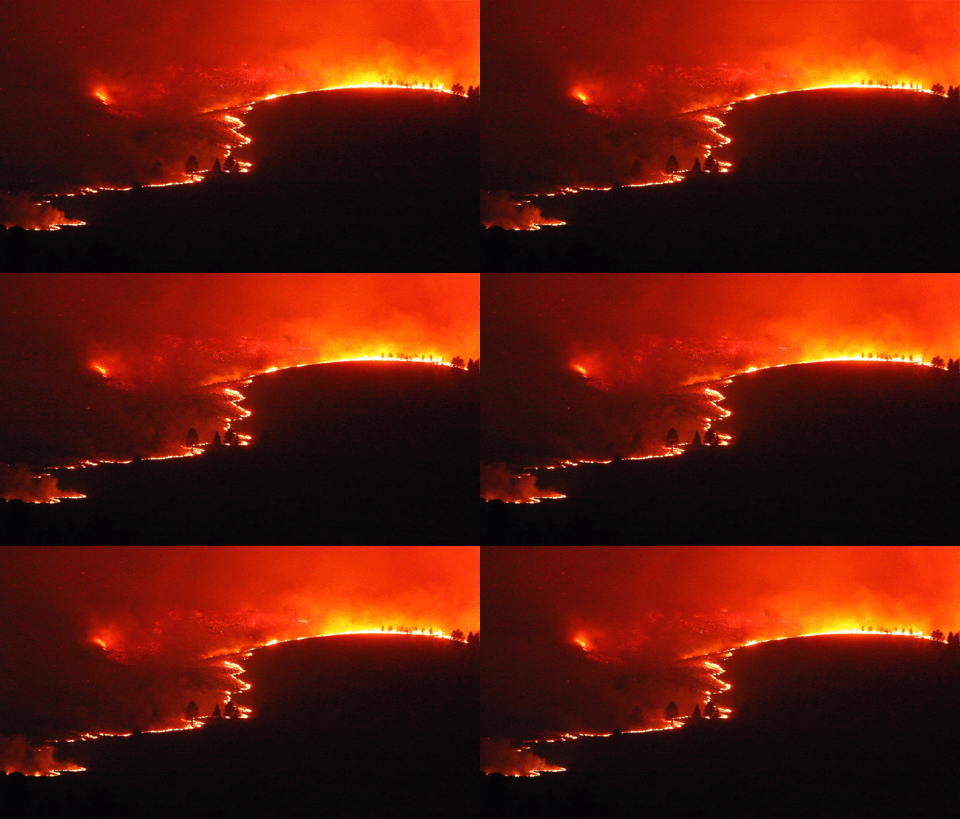
Our system uses multiple methods to identify real fire conditions while avoiding false alarms. It monitors both temperature and humidity from the sensor modules. The system triggers if any sensor reads clear indicators of extreme conditions, a temperature above 65°C or humidity below 10%. It also watches for the pattern of a developing fire: temperature rising drastically while humidity drops at the same time. Specifically, it looks for a 5°C temperature rise combined with a 20% humidity drop within an hour, or a 3°C rise with a 5% drop over 15 minutes. When fire is detected, the valve automatically opens to start water flow and stays open for thirty minutes before automatically closing.
Low Power Latching Solenoid Valve
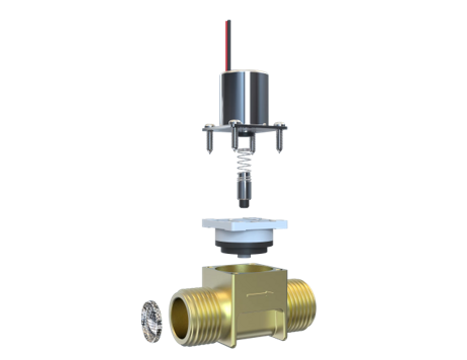
The system controls water flow using a low power latching solenoid valve. Unlike regular valves that need constant power to stay open or closed, the latching valve only needs a 50-millisecond pulse to change position, then it magnetically locks in place without using any extra power. This was perfect for our battery-powered system because the valve doesn't drain power continuously, only when it's switching.
Connectivity
